What is a coronavirus?
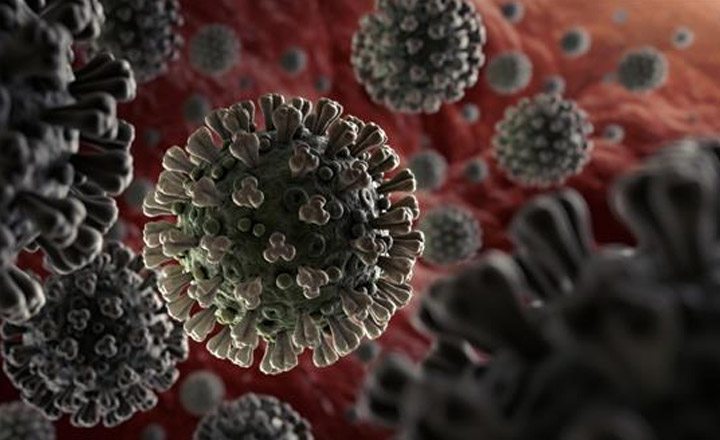
Coronaviruses are a large family of viruses that may cause disease in animals and humans. A number of coronaviruses are known to cause respiratory infections in humans, ranging in severity from the common cold to more severe diseases such as Middle East Respiratory Syndrome and Severe Acute Respiratory Syndrome (SARS). The recently discovered coronavirus causes coronavirus disease COVID-19.
What is COVID-19?
COVID-19 is an infectious disease caused by the recently discovered coronavirus. There was no knowledge of the existence of this new virus and disease before the outbreak broke out in the Chinese city of Wuhan in December 2019.
What are the symptoms of Covid-19?
The most common symptoms of Covid-19 are fever, fatigue, and dry cough. Some patients may experience aches and pains, nasal congestion, runny nose, sore throat, or diarrhea. These symptoms are usually mild and begin gradually. Some people become infected without showing any symptoms and without feeling sick. Most people (about 80%) recover from the disease without needing special treatment. Approximately 1 out of every 6 people who becomes infected with Covid-19 becomes seriously ill and experiences difficulty breathing. Older people and people with underlying medical problems such as high blood pressure, heart disease or diabetes are more likely to develop severe illness. About 2% of people who contracted the disease died. People with fever, cough, and difficulty breathing should seek medical care.
How does COVID-19 spread?
People can get COVID-19 from other people who have the virus. The disease can spread from person to person through small droplets that are spread from the nose or mouth when a person with COVID-19 coughs or sneezes. These droplets fall on objects and surfaces around the person. Other people can then become infected with COVID-19 by touching these objects or surfaces and then touching their eyes, nose or mouth. People can also become infected with COVID-19 if they breathe in droplets that come out when an infected person coughs or exhales. It is therefore important to stay more than 1 meter (3 feet) away from a sick person.
WHO is evaluating ongoing research into the ways COVID-19 spreads and will continue to publish its latest findings.
Can the virus that causes COVID-19 be transmitted through the air?
Studies to date indicate that the virus that causes COVID-19 is transmitted primarily through contact with respiratory droplets rather than through the air. See the answer to the previous question: “How does COVID-19 spread?”
Can one get the disease from an asymptomatic person?
The main way the disease is transmitted is through respiratory droplets that a person produces when coughing. The chances of contracting Covid-19 from a person who has no symptoms at all are low. But many people infected with the disease experience only mild symptoms. This is especially true in the early stages of the disease. Therefore, it is possible to contract Covid-19 from a person who suffers, for example, from a mild cough and does not feel sick. The organization is evaluating ongoing research on the transmission period of COVID-19 and will continue to publish the latest findings.
Can I get COVID-19 from the stool of an infected person?
The risk of transmitting COVID-19 through the stool of an infected person appears limited. While initial investigations suggest that the virus may be present in faeces in some cases, its spread through this route is not a major feature of the outbreak. The organization is evaluating ongoing research on the ways COVID-19 spreads and will continue to publish new findings. But given the risks involved, it's another reason to clean your hands regularly after using the bathroom and before eating.
How can I protect myself and prevent the spread of the disease?
Protective measures for everyone
Keep up to date with the latest information on the COVID-19 outbreak available on the WHO website and from your national and local public health authority. Many countries in the world have recorded cases of COVID-19, and many have experienced outbreaks. The relevant authorities in China and some other countries have succeeded in slowing the spread of outbreaks or stopping them completely. Since it is difficult to predict the development of the situation, please check regularly for the latest news.
You can reduce the possibility of contracting or spreading COVID-19 by taking some simple precautions:
- Clean your hands well regularly with an alcohol-based hand rub or by washing them with soap and water.
- Why? Cleaning your hands with soap and water or rubbing them with an alcohol-based sanitizer will kill viruses that may be on your hands.
- Maintain a distance of at least 1 meter (3 feet) between yourself and anyone who is coughing or sneezing.
- Why? When a person coughs or sneezes, small liquid droplets that may contain the virus spray from their nose or mouth. If you are too close, you can breathe in these droplets, including the virus that causes COVID-19 if the person has it.
- Avoid touching your eyes, nose, and mouth.
Why? Hands touch many surfaces and can pick up viruses. If the hands are contaminated, they may transmit the virus to the eyes, nose or mouth. The virus can enter the body through these outlets and make you sick.
- Make sure you and those around you follow good respiratory hygiene practices. This means covering your mouth and nose with your bent elbow or tissue when you cough or sneeze, then disposing of the used tissue immediately.
Why? Droplets spread the virus. By following good respiratory hygiene practices, you protect people around you from viruses such as cold, flu, and COVID-19.
- Stay home if you feel sick. If you have fever, cough, and difficulty breathing, seek medical care and call your provider before going to them. And follow the directions of your local health authorities.
Why? National and local authorities have the latest information on the situation in your area. Contacting your health care provider in advance will allow them to quickly direct you to the appropriate health care facility. This will help protect you and prevent the spread of viruses and other types of infections.
- Keep up to date with the latest developments in Covid-19. And follow the advice of your health care provider, national and local public health authorities, or your employer on how to protect yourself and others from COVID-19.
Why? National and local authorities have the latest information on whether COVID-19 is spreading in your area. They are best able to advise you on actions people in your area can take to protect themselves.
- Keep up-to-date on COVID-19 hotspots (cities or local areas where COVID-19 is spreading widely). Avoid traveling to these places as much as possible, especially if you are elderly, have diabetes, or have a heart or lung disease.
Why? Because there is a greater chance that you will become infected with Covid-19 in one of these areas.
Protective measures for people who are visiting or have recently visited areas where Covid-19 is spreading (in the past 14 days)
- Follow the instructions above (protective measures for everyone)
- If you start to feel unwell, even with mild symptoms such as headache, low-grade fever (37.3 degrees Celsius or more) and a slight runny nose, isolate yourself by staying at home until you fully recover. If you need to have someone bring you the supplies you need, or you have to go out to buy something to eat, for example, wear a mask to avoid infecting other people.
Why? Avoiding contact with others and visits to medical facilities will allow these facilities to operate more effectively, and will help protect you and others from the virus that causes COVID-19 and other viruses.
- If you have a fever, cough, and difficulty breathing, seek medical advice immediately, as you may have a respiratory infection or other serious condition. Call before going to your caregiver and tell him or her if you have traveled or been in contact with any travelers recently.
Why? Contacting your provider in advance will allow them to quickly direct you to the appropriate health care facility. This will also help prevent any potential spread of the virus that causes COVID-19 and other viruses.
What are my chances of getting COVID-19
The risk depends on where you are, and more specifically, whether COVID-19 infection is spreading there.
For most people in most places, the risk of infection with COVID-19 remains low. However, there are some places in the world (cities or regions) where the disease is currently spreading. The risk of COVID-19 infection is higher for people who live in or visit these areas. Governments and health authorities are currently taking strict measures whenever a new case of Covid-19 is detected. So, make sure you adhere to any restrictions imposed locally on travel, movement, or large gatherings. Cooperation with disease control authorities can reduce the risk of contracting and spreading COVID-19.
COVID-19 outbreaks can be contained and transmission of infection can be halted, as has been demonstrated in China and other countries. But, unfortunately, new outbreaks can appear quickly. Therefore, it is important to be aware of the situation where you are or intend to go.
Should I be worried about getting COVID-19?
Illness caused by infection with the new coronavirus (COVID-19) is generally mild, especially in children and young people. However, it can cause serious illness, with about 1 in 5 people with this disease needing hospital care. So, it's natural for people to feel anxious about how the COVID-19 outbreak will affect them and their loved ones.
We can channel our anxiety right into actions to protect ourselves, our loved ones and our communities. The most important of these measures is washing hands regularly and extensively and following good respiratory hygiene practices. Secondly, review and adhere to the advice of local health authorities, including restrictions that may be imposed on travel, movement and gatherings.
Who is at risk for severe illness?
We are still learning about how COVID-19 affects people, however it appears that older people and people with pre-existing medical conditions (such as high blood pressure, heart disease, diabetes) are more likely to develop severe illness.
Are antibiotics effective in preventing or treating COVID-19?
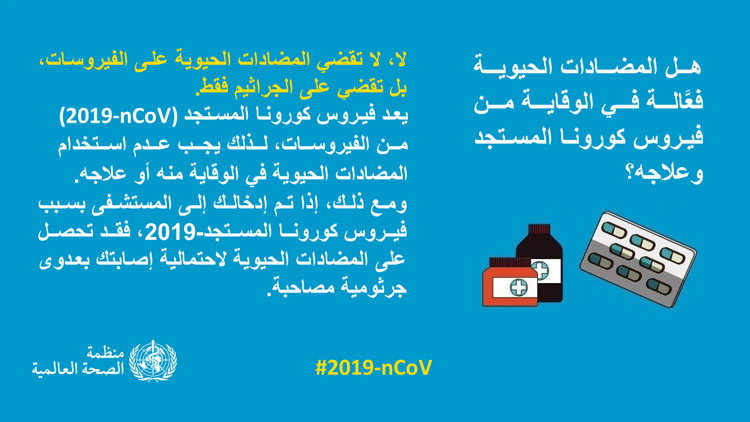
No. Antibiotics do not eliminate viruses, they only eliminate bacterial infections. Since COVID-19 is caused by a virus, antibiotics do not kill it. Antibiotics should not be used to prevent or treat COVID-19. They should only be used according to your doctor's instructions to treat bacterial infections.
Are there any medications or treatments that can prevent or treat COVID-19?
While some Western, traditional, or home-made medications may relieve or alleviate some of the symptoms of COVID-19, there is no evidence that there are currently medications that will prevent or treat this disease. The organization does not recommend self-medication with any medications, including antibiotics, whether to prevent or treat COVID-19. However, there are several ongoing clinical trials that include both Western and traditional medicines. The organization will continue to provide updated information on this matter when clinical results are available.
Is there a vaccine, medicine, or treatment for COVID-19?
Not yet. To date, there is no vaccine and no specific antiviral medication to prevent or treat COVID-2019. However, those affected should receive care to relieve symptoms. People with severe illness should be admitted to hospitals. Most patients recover with supportive care.
Some potential vaccines and medications to treat this specific disease are currently being investigated. It is being tested by clinical trials. The organization is coordinating efforts to develop vaccines and medicines to prevent and treat COVID-19.
The most effective ways to protect yourself and others from COVID-19 are to clean your hands regularly, cover your cough with a bent elbow or tissue, and stay at least 1 meter (3 feet) away from people who are coughing or sneezing. (See: How can I protect myself and prevent the spread of disease?)
Is COVID-19 the same as SARS?
No. The virus that causes COVID-19 and the virus that causes severe acute respiratory syndrome (SARS) are genetically related, but they are different. SARS is more deadly than Covid-19, but much less contagious. Nowhere in the world has there been a SARS outbreak since 2003.
Should I wear a mask to protect myself?
Only wear a mask if you have symptoms of COVID-19 (especially a cough) or if you are caring for someone who may have COVID-19. You can only use a single-use mask once. But if you are not sick or if you are caring for a sick person, you will have wasted a mask unnecessarily. Given the global shortage of masks, the Organization urges people to use them wisely.
The organization advises the rational use of masks to avoid unnecessary waste and misuse of precious resources (see guidance on the use of masks).
The most effective ways to protect yourself and others from COVID-19 are to clean your hands frequently, cover the mouth when coughing with a bent elbow or tissue, and leave a distance of at least 1 meter (3 feet). About people who are coughing or sneezing. For more information, see Basic protection measures against the emerging coronavirus.
The organization advises the rational use of medical masks to avoid wasting precious resources and misuse of masks (seeTips for using masks). Only use a mask if you have respiratory symptoms (coughing and sneezing), a suspected COVID-19 infection with mild symptoms, or you are caring for someone with a suspected COVID-19 infection. Suspected infection with COVID-19 is associated with travel to areas that have reported cases, or close contact with someone who has traveled to those areas and become ill.
The most effective ways to protect yourself and others from COVID-19 are to clean your hands regularly, cover your cough with a bent elbow or tissue, and stay at least 1 meter (3 feet) away from people who are coughing or sneezing. See Protection measures for more information.
How to put on, use, remove and dispose of a mask
1- Remember that the use of a mask should be limited to health workers, caregivers and people with respiratory symptoms such as fever and cough.
2- Before touching the mask, clean your hands by rubbing them with an alcohol-based sanitizer or washing them with soap and water.
3- Hold the mask and check it to make sure it is not torn or damaged. Perforated.
4- Locate the upper end of the mask (the location of the metal strip).
5- Make sure that the correct side of the mask is facing outward (the colored side).
6- Place the mask on your face. Press the metal strip or the reinforced end of the mask to form the shape of your nose.
7- Pull the bottom of the mask to cover your mouth and chin.
8- After use, remove the mask by removing the elastic band from behind the ears, keeping the mask away from your face and clothes to avoid touching potentially contaminated parts of the mask.
9- Dispose of the used mask immediately by throwing it in a closed waste bin.
10- Clean your hands after Touching the mask or throwing it away by rubbing it with an alcohol-based disinfectant, or washing it with soap and water if it is visibly dirty.
How long is the incubation period for COVID-19?
The term “incubation period” refers to the time from infection with the virus to the onset of symptoms of the disease. Most estimates of the incubation period for COVID-19 range between one and 14 days, and it usually lasts five days. These estimates will be updated as more data becomes available.
Can COVID-19 be transmitted to humans from an animal source?
Coronaviruses are a large family of viruses common among bats and animals. In rare cases, people become infected with these viruses, which they then transmit to others. Examples of this include the coronavirus that causes severe acute respiratory syndrome (SARS), which was linked to civet cats, and the coronavirus that causes Middle East respiratory syndrome, which was transmitted by camels. The potential animal sources of Covid-19 have not yet been confirmed.
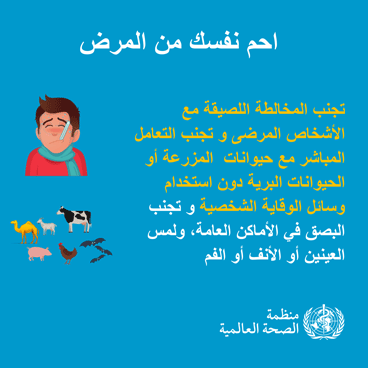
To protect yourself, for example when visiting live animal markets, avoid direct contact with animals and surfaces in contact with animals. Be sure to follow good food safety practices at all times by using due care when handling raw meat, raw milk and animal organs to avoid contamination of uncooked foods, and avoid eating raw or undercooked animal products.
Can I get COVID-19 from my pet?
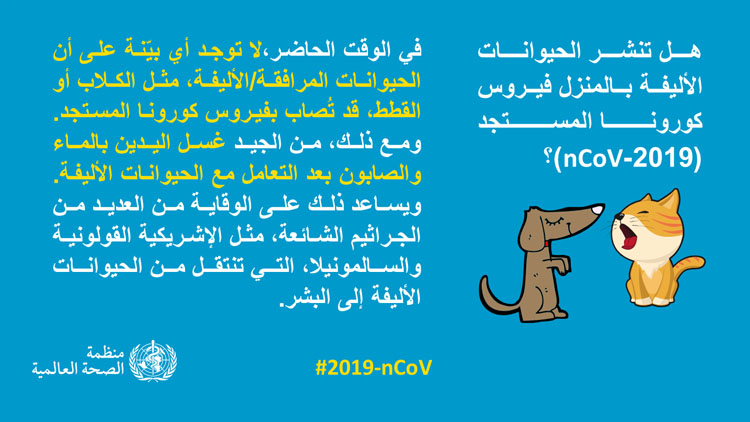
No, there is no evidence that companion animals or pets such as cats and dogs have been infected with COVID-19 or can spread the virus that causes it. For this disease.
How long does the virus survive on surfaces?
It is not known with certainty how long the virus that causes Covid-19 survives on surfaces, but it appears to be similar to other coronaviruses. Studies indicate that coronaviruses (including preliminary information on the virus that causes Covid-19) may remain viable on surfaces for a few hours or several days. This may vary depending on conditions (such as surface type and environmental temperature or humidity).
If you think a surface may be contaminated, clean it with a regular disinfectant to kill the virus and protect yourself and others. Clean your hands by rubbing them with an alcohol-based sanitizer or washing them with soap and water. And avoid touching your eyes, mouth or nose.
Is it safe to receive packages from areas that have reported cases of COVID-19?
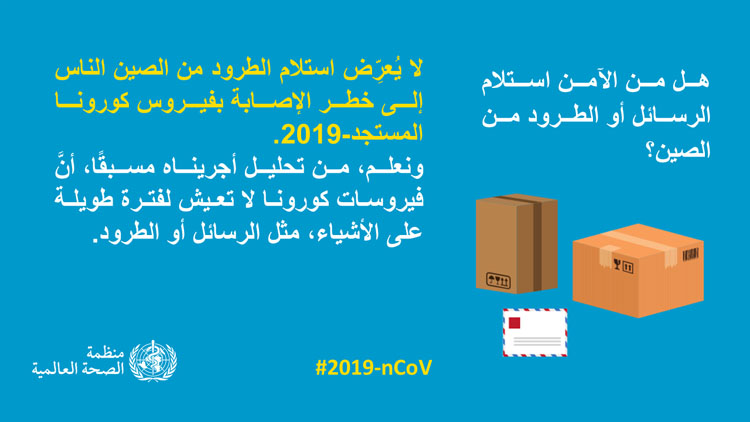
Yes. The risk of contamination of commercial goods by an infected person is low, and the risk of contracting the virus that causes COVID-19 from a package that has been transported, shipped, and exposed to various conditions and temperatures is small.
Do pneumonia vaccines protect against the new coronavirus?
No. Vaccines against pneumonia, such as the pneumococcal conjugate vaccine and the Haemophilus influenzae type b vaccine, do not protect against the new coronavirus.
This virus is completely new and different, and needs its own vaccine. Researchers are working to develop a vaccine against the 2019 novel coronavirus, and the World Health Organization supports these efforts.
Although these vaccines are not effective against the 2019 novel coronavirus, it is highly recommended to get vaccinated against respiratory diseases to protect your health.
Does regularly rinsing the nose with saline help prevent infection with the new coronavirus?
No. There is no evidence that regularly rinsing the nose with a saline solution prevents infection with the new coronavirus.
But there is limited evidence that regularly rinsing the nose with a saline solution helps recover from a cold more quickly. However, regular nasal rinsing has not been proven to prevent respiratory diseases.
Does taking oseltamivir help in recovery from the new coronavirus (2019-nCoV)?
There is not yet any evidence to confirm that oseltamivir helps in recovery from the 2019-nCoV.
The World Health Organization, in cooperation with researchers and doctors around the world, is actively seeking to investigate possible treatments for the virus. This includes researching whether current antiviral drugs have an effect on the virus. However, the work is still at an early stage, and no recommendations have been issued.
Does gargling with mouthwash help prevent infection with the emerging coronavirus?
No. There is no evidence that using mouthwash prevents infection with the emerging coronavirus.
There are some brands of mouthwash that may eliminate certain germs for a few minutes in saliva in the mouth. But this does not mean that it protects against infection with the 2019 new coronavirus.
Does eating garlic help prevent infection with the new coronavirus?
Garlic is a healthy food, and it contains some antimicrobial properties. However, there is no evidence from the current outbreak that eating garlic prevents infection with the new coronavirus.
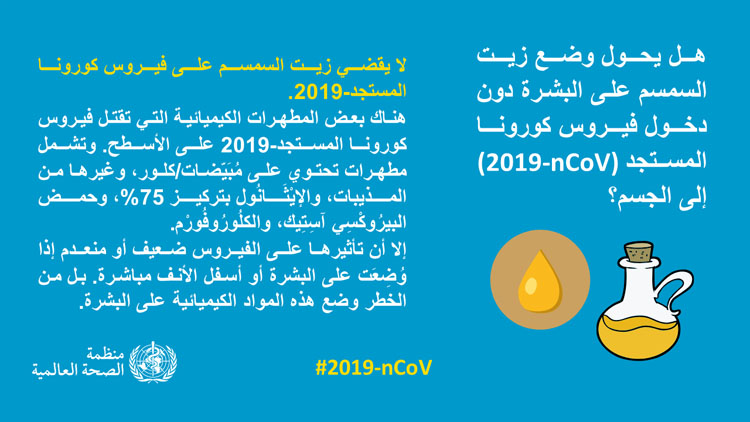
Does applying sesame oil to the skin prevent the new coronavirus from entering the body?
No. Sesame oil does not eliminate the emerging coronavirus. There are some chemical disinfectants that kill the 2019-nCoV on surfaces. They include disinfectants that contain bleach/chlorine, other solvents, 75% ethanol, peroxyacetic acid, and chloroform.
However, their effect on the virus is weak or non-existent if applied to the skin or directly under the nose. It is even dangerous to put these chemicals on the skin.
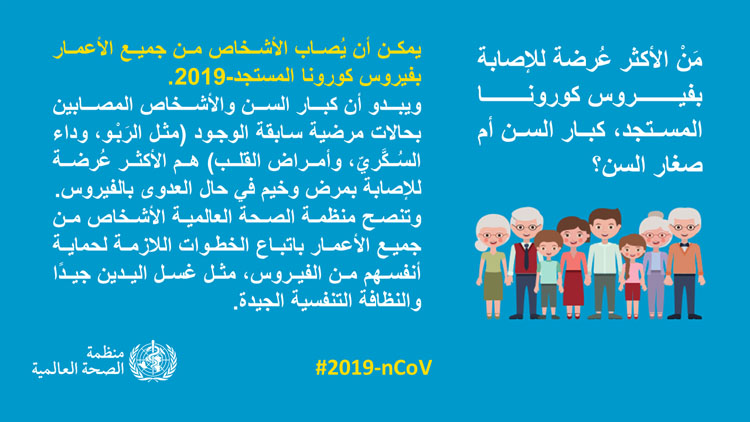
Who is more vulnerable to infection with the new coronavirus, the elderly or the very young?
People of all ages can be infected with the 2019 new coronavirus. Older people and people with pre-existing medical conditions (such as asthma, diabetes, and heart disease) appear to be more vulnerable to severe illness if infected with the virus.
The World Health Organization advises people of all ages to take steps to protect themselves from the virus, such as washing hands well and good respiratory hygiene.
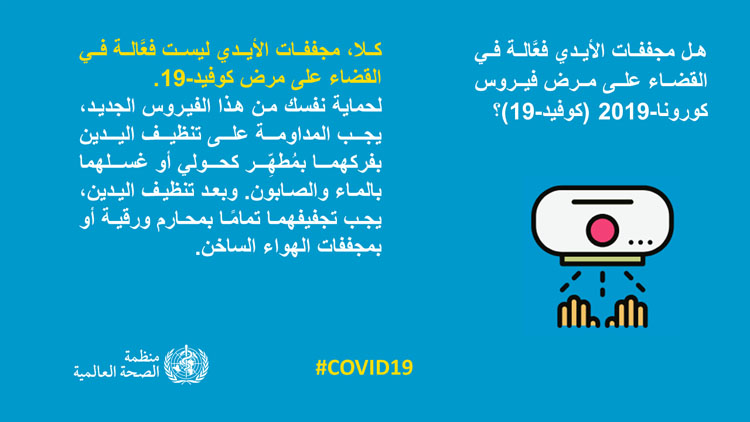
Are hand dryers (available in public restrooms, for example) effective in eliminating the emerging coronavirus within 30 seconds?
No, Hand dryers are not effective in eliminating the emerging coronavirus. To protect yourself from the new virus, you must always clean your hands by rubbing them with an alcohol-based sanitizer or washing them with soap and water. After cleaning the hands, they must be dried completely with paper towels or hot air dryers.
Can N95 masks be reused? Can it be sterilized with hand sanitizer?
No, face masks, including flat medical masks or N95 masks, should not be reused. If you are exposed to someone infected with the new coronavirus or another respiratory infection, the front of the mask is already contaminated. The mask should be removed without touching the front and disposed of properly. After removing the mask, the hands should be rubbed with an alcohol-based sanitizer or washed with soap and water. Can the fumes and gases emitted from fireworks and crackers protect against the new coronavirus (2019-nCoV)? It is dangerous to inhale the fumes and gases emitted from fireworks and crackers, and they do not kill the new coronavirus - 2019-nCoV. The fumes rising from them contain sulfur dioxide, which is a mild gas. Toxicity, and some people are allergic to it. It may lead to inflammation of the eyes, nose, throat, and lungs, and may cause an asthma attack. Being close to fireworks exposes you to the risk of burns and inhaling the fumes rising from them. Do ultraviolet sterilization lamps eliminate the new Corona virus? Ultraviolet lamps should not be used to sterilize hands or any other parts of the skin because these rays can cause skin allergies.Does spraying the body with alcohol or chlorine help eliminate the new coronavirus?No, spraying the body with alcohol or chlorine will not eliminate viruses that have already entered your body. It may even be harmful to clothing or mucous membranes (such as the eyes and mouth). However, both alcohol and chlorine may be useful for sterilizing surfaces but should be used according to appropriate recommendations.There are several measures you can apply to protect yourself from the new coronavirus. Start cleaning your hands regularly by rubbing them with an alcohol-based sanitizer or washing them with soap and water. For more preventive measures: How effective are thermal scanners in detecting those infected with the new coronavirus (2019-nCoV)? The reason for this is that it takes two to 10 days for infection to appear in infected people. Are there things that I should avoid? The following measures are ineffective against Covid-19 and may even be harmful: Smoking Using multiple masks Taking antibiotics Are there any medications or treatments that can prevent or treat Covid-19? In all cases, If you have fever, cough, and difficulty breathing, seek medical care early to reduce the risk of more severe infection, and be sure to tell your health care provider about any places you have recently traveled.
هل يمكن للأدخنة والغازات المنبعثة من الألعاب النارية والمفرقعات الوقاية من فيروس كورونا المستجد (2019-nCoV)؟
من الخطر استنشاق الأدخنة والغازات المنبعثة من الألعاب النارية والمفرقعات، كما أنها لا تقتل فيروس كورونا المستجد-2019.
وتحتوي الأدخنة المتصاعدة منها على ثاني أكسيد الكبريت، وهو غاز متوسط السُّمّية، وبعض الأشخاص لديهم حساسية منه. وقد يؤدي إلى التهاب العينين، والأنف، والحلق، والرئتين، وقد يُسبب نَوْبَة رَبْو.
ويُعرِّض الاقتراب من الألعاب النارية إلى خطر الإصابة بحروق واستنشاق الأدخنة المتصاعدة منها.
هل تقضي مصابيح التعقيم بالأشعة فوق البنفسجية على فيروس كورونا الجديد؟
ينبغي عدم استخدام مصابيح الأشعة فوق البنفسجية لتعقيم اليدين أو أي أجزاء أخرى من الجلد لأن هذه الأشعة يمكن أن تسبب حساسية للجلد.
هل يساعد رش الجسم بالكحول أو الكلور في القضاء على فيروس كورونا الجديد؟
كلا، رش الجسم بالكحول أو الكلور لن يقضي على الفيروسات التي دخلت جسمك بالفعل. بل قد يكون ضاراً بالملابس أو الأغشية المخاطية (كالعينين والفم). مع ذلك، فإن الكحول والكلور كليهما قد يكون مفيداً لتعقيم الأسطح ولكن ينبغي استخدامهما وفقاً للتوصيات الملائمة.
هناك عدة تدابير يمكنك تطبيقها لحماية نفسك من فيروس كورونا الجديد. ابدأ بتنظيف يديك بشكل منتظم بفركهما بمطهر كحولي أو بغسلهما بالماء والصابون. للمزيد من التدابير الوقائية
إلى أي مدى الماسحات الحرارية فعَّالة في الكشف عن المصابين بفيروس كورونا المستجد (nCoV-2019)؟
تعد الماسحات الحرارية فعَّالة في الكشف عن الأشخاص المصابين بحمى (أي الذين ترتفع درجة حرارتهم عن المعدل الطبيعي لدرجة حرارة الجسم) من جراء العدوى بفيروس كورونا المستجد-2019.
ومع ذلك، لا يمكنها الكشف عن الأشخاص المصابين بالعدوى، ولم تظهر عليهم أعراض الحمى بعد. ويعود السبب في ذلك إلى أن العدوى تستغرق يومين إلى 10 أيام حتى تظهر أعراض المرض والحمى على الأشخاص المصابين.
هل هناك أمور ينبغي أن أتجنبها؟
التدابير التالية غير فعّالة في مواجهة مرض كوفيد-19 بل قد تكون ضارة:
- التدخين
- استخدام كمامات متعددة
- تعاطي المضادات الحيوية
- هل توجد أي أدوية أو علاجات يمكنها الوقاية من مرض كوفيد-19 أو علاجه؟
في جميع الأحوال، إذا كنت مصاباً بالحمى والسعال وصعوبة التنفس، التمس الرعاية الطبية مبكراً من أجل الحد من مخاطر الإصابة بعدوى أشد وطأة، وتأكد من إطلاع مقدم الرعاية الصحية على أي أماكن سافرت إليها في الآونة الأخيرة.

📚 Related articles